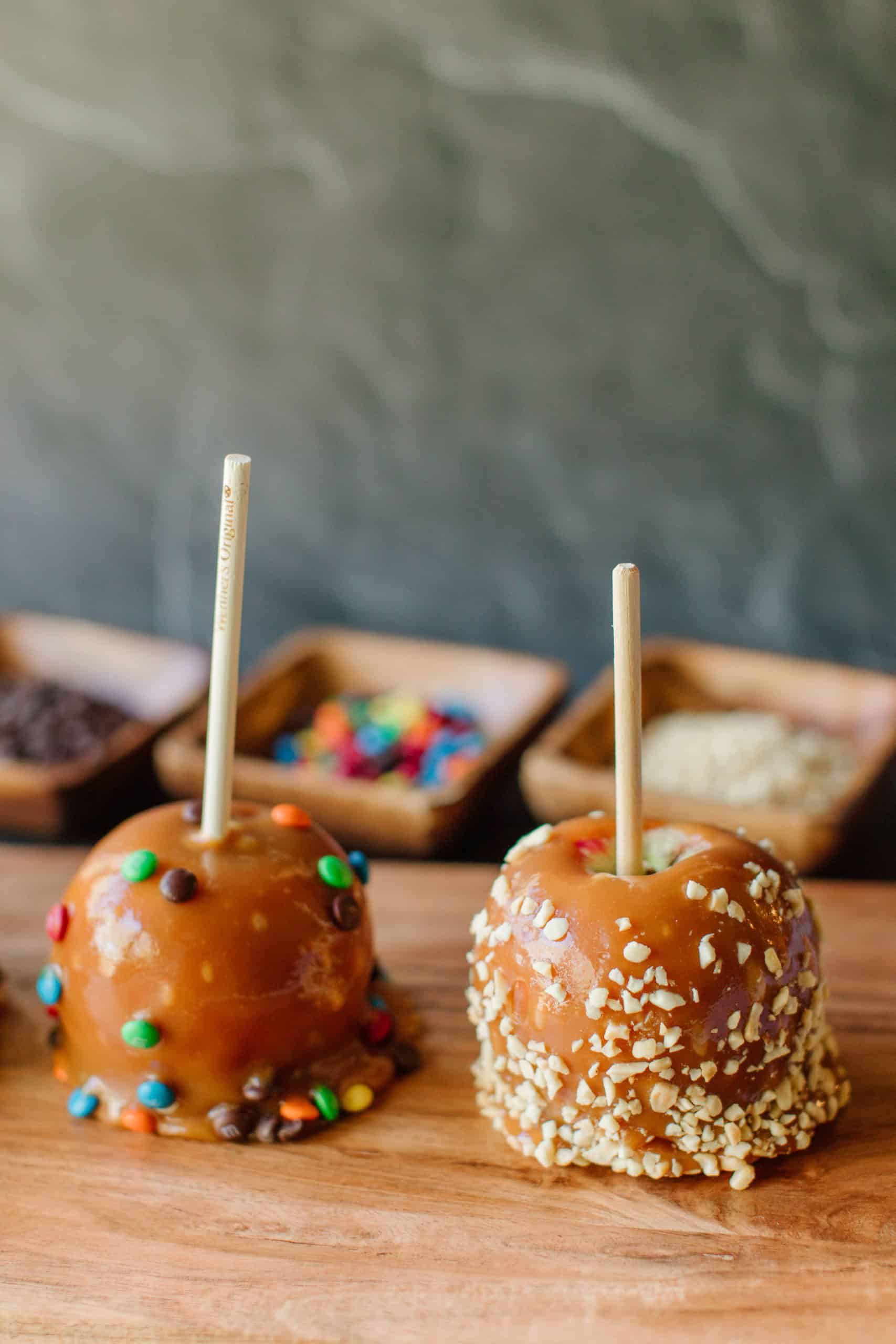
Homemade Caramel Apples
Tart, cold apples dunked in a glossy brown sugar caramel that stays soft enough to bite clean through. Cook it to the right temperature and it grips the fruit instead of pooling on the pan.
Ingredients
Makes 8 caramel apples
Apples
Caramel
Toppings
Instructions
- 1
Strip the wax off the apples
Almost every apple you buy has been buffed with a food-grade wax, and caramel cannot grab onto wax. Fill a bowl with very hot tap water, submerge the apples for about a minute, then scrub each one hard with a rough kitchen towel or a clean non-scratch scrubbing pad. You should feel the surface go from slippery to squeaky. Rinse under cool water.
- 2
Dry them completely and chill
Dry each apple aggressively with a towel, including the dimple around the stem where water hides. Any film of moisture will turn to steam under hot caramel and float the coating right off. Pull the stems, push a wooden craft stick about two thirds of the way down into the stem end of each apple, and refrigerate them on a tray for at least 30 minutes. Cold fruit sets the caramel fast, which is what keeps it from sliding into a puddle.
- 3
Build your dipping station first
Once the caramel is ready you will not have a spare hand, so set everything out now. Line a rimmed baking sheet with parchment and rub it with a thin film of butter or oil. Put each topping in its own shallow bowl, wide enough to roll an apple in. Have the thermometer clipped and ready.
- 4
Melt the caramel base
In a heavy-bottomed 3-quart saucepan, combine the butter, brown sugar, corn syrup, condensed milk, heavy cream, and fine sea salt. Set it over medium heat and stir with a heatproof spatula until the butter melts and the sugar dissolves. Use a taller pot than you think you need, because this mixture climbs as it boils.
- 5
Cook to 246°F
Clip on a candy or digital thermometer, making sure the tip sits in the caramel but not against the bottom of the pan. Bring it to a steady boil over medium heat and stir slowly and constantly, scraping the corners so nothing scorches. Expect 25 to 35 minutes. The color will deepen from pale tan to a rich amber and the bubbles will get thicker and slower. Pull it off the heat the moment it reads 246°F. A few degrees low gives you caramel that drips off; a few degrees high gives you a jaw workout.
- 6
Stir in the vanilla and let it cool down
Off the heat, stir in the vanilla, standing back because it will sputter. Now wait. Let the caramel cool undisturbed until the thermometer reads about 200°F, roughly 10 to 15 minutes. Dipping at boiling temperature is the second most common reason caramel slides off. It should coat a spoon in a thick, slow-moving layer.
- 7
Dip the apples
Take the apples straight from the fridge. Tilt the pan, hold an apple by the stick, and lower it in, turning to coat up to the shoulder. Lift it out and hold it above the pan for 10 to 15 seconds, rotating slowly so the excess runs back down. Then swipe the very bottom of the apple against the rim of the pan to shear off the drip that would otherwise form a caramel foot.
- 8
Add toppings right away
Roll or press the apple into your topping while the caramel is still tacky, which is only a window of a few seconds. For chopped nuts and crushed pretzels, roll the bottom half. For chocolate chips, press them on individually so they do not melt into smears. Sprinkle flaky salt from a height so it lands evenly. Stand each finished apple on the greased parchment.
- 9
Set them firm
Let the apples sit at room temperature for 15 minutes, then move the tray to the refrigerator for at least an hour until the caramel is fully firm and no longer tacky to the touch. Bring them back to room temperature for 15 to 20 minutes before serving so the caramel softens to a clean bite.
You did it! Help us bring baking back home by selling your delicious baked goods on Homebaked!
Baker's Tips
- 1.
If your caramel finishes thin or slides off, it almost always means one of three things: the apples still had wax on them, they were not bone dry, or the caramel was dipped above 210°F. Rewarm the caramel gently, recheck it at 200°F, and try again.
- 2.
Small apples work better than large ones. A baseball-sized apple gives you a far better caramel-to-fruit ratio and is actually possible to eat, while a huge apple leaves the coating stretched thin at the top.
- 3.
A digital instant-read or probe thermometer beats a clip-on candy thermometer here. The margin between chewy and rock-hard is only about six degrees, and old glass thermometers drift.
- 4.
Test your thermometer before you start by putting it in boiling water. It should read 212°F at sea level. If it reads 208°F, cook your caramel to 242°F instead and adjust by the same gap.
- 5.
Leftover caramel is a bonus, not a waste. Pour it into a jar, and once cooled it becomes a thick dip for apple slices, or warm it gently with a splash of cream to loosen it into a sauce.
- 6.
For a chocolate-drizzled finish, chill the dipped apples for 20 minutes until the caramel is cold and firm, then drizzle with melted chocolate. Warm caramel and warm chocolate just blend into mud.
- 7.
Trim a thin slice off the very bottom of each apple before dipping if you want them to stand up straight on a platter.
Equipment
- Heavy-bottomed 3-quart saucepan
- Digital candy thermometer or instant-read probe
- 8 wooden craft sticks or sturdy lollipop sticks
- Rimmed baking sheet
- Parchment paper
- Heatproof silicone spatula
- Shallow bowls for toppings
Storage
Caramel apples are best within 2 to 3 days. Keep them on the parchment-lined tray at cool room temperature for the first day if you are serving them soon. For longer storage, let them set completely, wrap each apple individually in wax paper or plastic wrap, and refrigerate in an airtight container for up to 1 week. The apple itself will soften and weep a little past that point. Always let them sit out for 15 to 20 minutes before eating, since cold caramel is unpleasantly hard. Do not freeze them: the apple turns mealy and the caramel sweats as it thaws. Once sliced, store the pieces in a sealed container in the fridge and eat the same day.